Category Archives: Education

Google India Women in Engineering Award 2008

Google India Women in Engineering Award 2008

The award is open to full time woman students at recognized institutions majoring computer engineering or related fields in their 2nd to final years of a bachelor’s program and all students from a master’s or PhD program. Student must have a cumulative of at least 4.0 on a 5.0 scale, 8.0 on a 10.0 scale, or equivalent. The application deadline is January 31st. Apply online for this new award.

Related: Google 2007 Anita Borg ScholarshipGoogle India Looking for EngineersGoogle Summer of Code 2007Innovation at GoogleCurious Cat Advice Links on Science and Engineering Scholarships and Fellowships

Palm Tree Flowers After 100 Years and Self-destructs

New Genus of Self-destructive Palm found in Madagascar

It has an unusual and spectacular lifecycle; growing to dizzying heights before the stem tip converts into a giant terminal inflorescence and bursts into branches of hundreds of tiny flowers. Each flower is capable of being pollinated and developing into fruit and soon drips with nectar and is surrounded by swarming insects and birds. The nutrient reserves of the palm become completely depleted as soon as it fruits and the entire tree collapses and dies a macabre death.

Madagascar is home to more than 10,000 plant species and 90% of Madagascar’s plants occur nowhere else in the world. The country has a highly diverse palm flora with over 170 known species, all but six of which are endemic. Scientists predict that there are less than 100 individuals of this palm in Madagascar. Only 18 percent of Madagascar’s native vegetation remains intact and a third of Madagascar’s primary vegetation has disappeared since the 1970s.

The self-destructing palm tree that flowers once every 100 years

Kew botanist Mijoro Rakotoarinivo: “It’s spectacular. It does not flower for maybe 100 years and when it’s like this it can be mistaken for other types of palm. “But then a large shoot, a bit like an asparagus, grows out of the top of the tree and starts to spread. “You get something that looks a bit like a Christmas tree growing out of the top of the palm.” There are thought to be only be 100 of the trees that are believed to be about 80 million years old.

Related: How flowering plants beat the competitionMoringa Oleifera: The Miracle Tree

Chess Match of the 20th Century

Bobby Fischer made chess popular in the USA when he burst upon the chess scene and gave the USA a world champion. He become a grand master by 15, the youngest ever to do so. He died today in Iceland the site of “match of the century.” View the Fischer v. Spassky games, including the match of the century, which was played in 1972.

The genius who re-invented chess

After he beat Boris Spassky in Iceland in 1972 to become world chess champion, the game would never quite be the same again. A lone American had defeated the might of the Soviet chess machine.

Chess was suddenly on newspaper front pages across the world. In New York a reporter went from bar to bar and discovered that of the 21 he visited, 18 had their televisions tuned to the chess – and only three to the Mets baseball game.

Here is a game of Donald Byrne vs Robert James Fischer when Bobby Fischer was 13 years old when he played this game.

Related: The birth of Fischer Random Chess1972 Fischer v. Spassky Title Match Highlights

Parasite Rex

Parasite Rex is a great book by Carl Zimmer (one of the bloggers listed in the Curious Cat directory of science blogs). This is the first book read as part of my specific plan to read more about bacteria, cells, virus, genes and the like.

One of the most enjoyable aspects of writing this blog is that I have focused much more on cool things I read. And over time the amazing things I posted about related to these topics made me realize I should put some focused effort to reading more on these topics. Some of the posts that sparked that idea: Tracking the Ecosystem Within UsInner Life of a Cell: Full VersionWhere Bacteria Get Their Genes, People Have More Bacterial Cells than Human Cells, Biological Molecular MotorsEnergy Efficiency of DigestionOld Viruses Resurrected Through DNAMidichloria mitochondriiMicrobesUsing Bacteria to Carry Nanoparticles Into CellsHow Bacteria Nearly Destroyed All LifeNew Understanding of Human DNASoil Could Shed Light on Antibiotic ResistanceSymbiotic relationship between ants and bacteria

Parasite Rex was a great place to start. Carl Zimmer is a great writer, and the details on how many parasites there are and how interconnected those parasites are to living systems and how that has affected, and is affecting, us is amazing. And the next book I am reading is also fantastic: Good Germs, Bad Germs. Here is one small example from Parasite Rex, page 196-7:

A person who dies of sickle cell anemia is less likely to pass on the defective gene, and that means the disease should be exceedingly rare. But it’s not – one in four hundred American blacks has sickle sell anemia, and one in ten carries a single copy of the defective gene. The only reason the gene stays in such high circulation is that is also happens to be a defense against malaria.

Malaria is a parasite. One of the amazing things with repeated examples in the book were parasites that seemed to have extremely complicated life cycles (that don’t seem like a great strategy to prosper but obviously work). Where they grow in one life form (an insect or mammal or whatever) but must leave that life form for some other specific life form for the next stage in life (they cannot have descendants without doing so…). Seems like a crazy way to evolve but it happens over and over again.
Continue reading

In Tunguska, Siberia 99 Years Ago

Just What Happened 99 Years Ago in Tunguska, Siberia?

in the morning of 30 June 1908, a few native peoples in Siberia reported seeing a blue light in the sky that was as bright as the sun and hearing a series of loud explosions, accompanied by fierce winds and fire. These explosions, which flattened the pristine Siberian Taiga for 770 miles (2,000 kilometers) around, are estimated to have had the power of 2000 Hiroshima atomic bombs. However, this area is so remote and Russia was experiencing so much political turmoil that no one was able to investigate the scene until 1927

Gasperini’s team says their data suggest that a 10 meter (33 foot) wide fragment of the celestial object was blasted free by the explosion and continued traveling in the same direction that the original object was moving in. This fragment traveled slowly, about 1 kilometer a second (0.6 mile) per second. When the fragment plowed into the marshy terrain five miles north of the explosion epicenter, it created a long, trenchlike depression.

“It splashed on the soft, swampy soil and melted the underlying permafrost layer, releasing CO2 [carbon dioxide], water vapor, and methane that broadened the hole, hence the shape and size of the basin, unusual for an impact crater,” argues Gasperini, adding that “our hypothesis is the only one that accounts for the funnel-like morphology of Lake Cheko’s bottom.”

Related: research paper A possible impact crater for the 1908 Tunguska EventMeteorite, Older than the Sun, Found in CanadaNASA Tests Robots at Meteor Crater

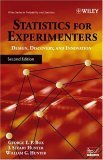
Statistics for Experimenters Review

Statistics for Experimenters cover
   
Disclosure, I am a bit biased – William G. Hunter was my father. But I agree with this review of Statistics for Experimenters: Design, Innovation, and Discovery , 2nd Edition posted by George Samaras

Superb! If you are involved, in any way, with science or engineering, you need this book on your shelf (after you have carefully read it twice). My only complaint is that I found out about it circuitously reading Prof. Box’s “Improving Almost Anything”; I was curious what the often cited BHH reference was. I think someone should have a word with the publisher’s marketing department; if we don’t know about it, how are we supposed to buy it?

George Box, Stu Hunter and Bill Hunter authored the first edition book in 1978 and the second edition in 2005.

I maintain Statistics for Experimenters web site. Visit the page to find resources, or to let us know about resources (data sets, exercises, etc.) for those using the book.

Related: Correlation is Not CausationStatistics for Experimenters (2nd Edition)Randomization in SportsGoogle Scholar references for BHH

Norman Borlaug and Wheat Stem Rust

By increasing the production of wheat it is said Norman Borlaug has saved more lives than anyone else who ever lived. John Pollock provides a new look at his work in Green Revolutionary:

stem rust, a fungus whose airborne spores infect stems and leaves, shriveling grains.

Many thought the work that earned ­Borlaug his Nobel brought an end to stem rust, but it is back, in the form of a variant called Ug99, which emerged in Uganda and spread to Kenya and Ethiopia. “If it continues unchecked,” says Borlaug, “the consequences will be ruinous.”

Related: Five Scientists Who Made the Modern WorldMore Nutritious Wheat2004 Presidential Medal of Science WinnersDeadly wheat disease ‘a threat to world food security’

Discussing Medical Study Results

Brazilian berry destroys cancer cells in lab, UF study shows:

“Acai berries are already considered one of the richest fruit sources of antioxidants,” Talcott said. “This study was an important step toward learning what people may gain from using beverages, dietary supplements or other products made with the berries.” He cautioned that the study, funded by UF sources, was not intended to show whether compounds found in acai berries could prevent leukemia in people.

“This was only a cell-culture model and we don’t want to give anyone false hope,” Talcott said. “We are encouraged by the findings, however. Compounds that show good activity against cancer cells in a model system are most likely to have beneficial effects in our bodies.”

Other fruits, including grapes, guavas and mangoes, contain antioxidants shown to kill cancer cells in similar studies, he said. Experts are uncertain how much effect antioxidants have on cancer cells in the human body, because factors such as nutrient absorption, metabolism and the influence of other biochemical processes may influence the antioxidants’ chemical activity.

The title the University of Florida gives the press release is misleading I think (even though true). But at least the text provides reasonable caution. We really need to make sure press releases (especially from Universities) don’t focus on hype. Universities need to be held their missions of education which includes helping the public understand science not confusing the public. Dr. Talcott’s page on the Açai berry. Universities are obviously more and more focusing on revenue instead of education – I am sure they will claim to support education… but they need to show that is true.

Related: Cancer Cure, Not so FastWhy Most Published Research Findings Are FalseEat food. Not too much. Mostly plants.
Science Webcasts

I have high hopes for SciVee – essentially a science focused YouTube. It has not grown as fast as I hoped it would when I first wrote about it last summer. Here is one cool short from the site:

This is a highly accurate visualization of the Bacteriophage T4 based on Cryo-EM datasets of the virus. The scope of the animation is to show the infection process of the T4 into an E. coli cell.

If you like that you will love: Inner Life of a Cell – Full Version

Some other recent SciVee videos: Where does water go when it rains?MicrobeWorld visits The Maloy Lab at San Diego State UniversityScience Gateways on the TeraGridSix Science bloggers talk about why they blog

Related: Science and Engineering Webcast DirectoryGoogle Engineering and Technology WebcastsTED (Technology, Entertainment, Design) talks