Category Archives: Universities

Offering Residency to Foreign Engineers and Scientists

Rep. Lofgren wants residency for foreign engineers

Foreign-born engineering, science, and math students in the United States should be automatically granted legal residency when they get a job in this country, said California Congresswoman Zoe Lofgren.

Lofgren, a Democrat, spoke to an audience Friday at the Joint Venture: Silicon Valley conference about threats to innovation in the area. She said that about 56 percent of the Ph.D. candidates at the finest schools in the United States are immigrants, and because of the government’s current immigration policy, many of those people leave the country.

I support such legislation. I also think it is only one, of many measure to take to encourage science and engineering excellence (which will in turn help the economy). I have no doubt that other countries are going to be successful establishing their own global centers of excellence and attract scientists and engineers from around the world: including from the USA. The Curious Cat Science and Engineering Blog now includes a tag cloud on the right side of our home page, tags for this post include: government and economy.

Related: Brain Drain Benefits to the USA Less Than They Could Beeconomic benefits of science and engineering excellenceUSA Losing Brain Drain Benefits

Superconducting Surprise

Assistant Professor of Physics Eric Hudson transfers liquid helium to cool the scanning tunneling microscope

Research Finds Superconducting Surprise

Most superconductors only superconduct at temperatures near absolute zero, but about 20 years ago, it was discovered that some ceramics can superconduct at higher temperatures (but usually still below 100 Kelvin, or -173 Celsius). Such high-temperature superconductors are now beginning to be used for many applications, including cell-phone base stations and a demo magnetic-levitation train. But their potential applications could be much broader. “If you could make superconductors work at room temperature, then the applications are endless,” said Hudson.

Superconductors are superior to ordinary metal conductors such as copper because current doesn’t lose energy as wasteful heat as it flows through them, thus allowing larger current densities. Once a current is set in motion in a closed loop of superconducting material, it will flow forever.

The new MIT study shows that scattering by impurities occurs in the pseudogap state as well as the superconducting state. That finding challenges the theory that the pseudogap is only a precursor state to the superconductive state, and offers evidence that the two states may coexist.

This method of comparing the pseudogap and superconducting state using STM could help physicists understand why certain materials are able to superconduct at such relatively high temperatures, said Hudson. “Trying to understand what the pseudogap state is is a major outstanding question,” he said.

Related: Mystery of High-Temperature Superconductivity, Pseudogaps Are Not The AnswerSuperconductivity and Superfluidity

Photo: Assistant Professor of Physics Eric Hudson transfers liquid helium to cool the scanning tunneling microscope he is using in his research on high-temperature superconductivity. Photo by Donna Coveney.

Engineering Education at Smith College

How to Re-engineer an engineering major at a women’s college:

The first women’s college to offer an engineering degree, Smith is forging new paths in a field that’s eager to swell its ranks in the United States. Women receive only 20 percent of bachelor’s degrees in engineering, according to a new report by the National Science Board (NSB). Like a handful of other liberal arts colleges, Smith is producing graduates who’ve had a different type of engineering education – one that goes beyond technical training to focus on a broader context for finding solutions to humanity’s problems; one that emphasizes ethics and communication; one so flexible that about half the students study abroad, which is rare, despite the multinational nature of many engineering jobs.

Smith’s program boasts a 90 percent retention rate and high participation of underrepresented minorities. Ms. Moriarty hopes to find out which elements of the experience at Smith most contribute to students’ success. Female role models play a part (6 out of 10 engineering faculty here are women), but she says other factors are likely to be more important: “I think the methods being used here could probably translate very easily to other institutions that aren’t all women,” she says.

Related: Smith’s engineering education effortsEngineering Education Study DebateA New Engineering EducationThe Future is Engineering

Harvard Liberal Arts Faculty Votes to Make Their Research Open Source

Harvard Liberal Arts Faculty Votes to Distribute Research Free

Harvard’s decision lends support to the growing open-access movement in academia, an approach opposed by journal-industry representatives who say bypassing journals and their peer-review process may harm the quality of published research.

“This is a large and very important step for scholars throughout the country,” Stuart Shieber, a computer science professor who sponsored the motion to adopt the new policy, said in a statement released after the vote. “It should be a very powerful message to the academic community that we want and should have more control over how our work is used and disseminated.”

Discussion of a similar move by the faculties of law, medicine and business are “well under way,” and the other faculties, such as education and government, are expected to consider it, Peter Kosewski, a spokesman for Harvard’s library system, said in an e-mail. No other votes are scheduled.

The policy would spur professors to distribute work free on a Harvard Web site, rather than through journals that charge subscribers “enormous amounts of money,” said Harry Lewis, a professor of computer science at the university. Authors could choose not to share their work on the site and could publish in a traditional journal.

Another good step for those that support science. As I have stated publicly funded universities should require open access. Privately funded universities I believe should decide to do so also, but it should be their choice. Government funded research should require open access publication.

Related: The Future of Scholarly Publication (written in 2005, the future is now)Howard Hughes Medical Institute Takes Big Open Access StepOpen Access LegislationHarvard to collect, disseminate scholarly articles for facultyScience Journal Publishers Stay StupidI Support the Public Library of ScienceOpen Access Journal Wars

National Science Board Report on Improving Engineering Education

Moving Forward to Improve Engineering Education a report from the National Science Board:

Changes in the global environment require changes in engineering education. Markets, companies, and supply chains have become much more international and engineering services are often sourced to the countries that can provide the best value. Basic engineering skills (such as knowledge of the engineering fundamentals) have become commodities that can be provided by lower cost engineers in many countries, and some engineering jobs traditionally done in the U.S. are increasingly done overseas. To respond to this changing context, U.S. engineers need new skill sets not easily replicated by low-wage overseas engineers.

Society at large does not have an accurate perception of the nature of engineering. Survey data indicate that the public associates engineers with economic growth and defense, but less so with improving health, the quality of life, and the environment.

The third challenge for engineering education is to retain those students who are initially attracted to engineering. Attrition is substantial in engineering, particularly in the first year of college. About 60 percent of students who enter engineering majors obtain a degree within 6 years. Although this retention rate is comparable to some other fields, it is especially critical for engineering to retain the pool of entering students.

Related: NAE Report on Educating the Engineer of 2020Engineering Education Study DebateEducating Engineers for 2020 and Beyond by Charles VestThe Future is Bright with Engineering and EntrepreneurismGlobal Engineering Education StudyUSA Under-counting Engineering GraduatesLeah Jamieson on the Future of Engineering EducationImproving Engineering Education the Olin Way

NSF Awards $50 Million for Collaborative Plant Biology Project

The National Science Foundation (NSF) today announced a $50 million award to a University of Arizona-led team to create the first national cyberinfrastructure center to tackle global “grand challenge” plant biology questions that have great implications on larger questions regarding the environment, agriculture, energy and the very organisms that sustain our existence on earth. The five-year project, dubbed the iPlant Collaborative, potentially is renewable for a second five years for a total of $100 million.

Like no other single research entity, the iPlant Collaborative will provide the capacity to draw upon resources and talent in remote locations and enable plant scientists, computer scientists and information scientists from around the world for the first time ever to collaboratively address questions of global importance and advance all of these fields. It will bring together and leverage the resources and information generated through the National Plant Genome Initiative, enabling more breadth and depth of research in every aspect of plant science.

“We are confident in the positive returns of this substantive investment in basic research,” said NSF Director Arden L. Bement. “The iPlant Collaborative will harness the best and the brightest scholars and research in plant biology in order to tackle some of the profound issues of our day and for our future. Challenges that may need plants for solutions include addressing the impacts of climate change, dwindling oil supply, decreasing agricultural land area, increasing population and environmental degradation.”
Continue reading

Science and Engineering Instructional Webcasts

doFlick offers user-generated educational, technical and instructional videos on science and engineering. Examples include: Simple CircuitsHow to do a basic leak test in vacuum systemsBacteria in the Human MouthTransverse Standing WavesPulsed Layer Deposition Overview

The site offers a short videos on science and engineering topics (plus some other topics as well). The site fills a niche that is different that any other site I have seen. The videos are largely tips on lab or engineering techniques or edited labs. These are videos that might appear on network TV but they are exactly the type of resource that makes the internet great. Lets build this resource: upload your own webcasts. There is a great advantage to short targeted online videos (compared to full course lectures – which are also great) because the short targeted videos allow for targeted linking specifically to the video content you want to link to.

This is definitely worth adding to your bookmarks. Or you can just bookmark our directory of science and engineering videos.

Related: YouTube+ for Science from PLoSUC-Berkeley Course VideosGoogle Tech Webcasts #3

Who Killed the Software Engineer?

Computer Science Education: Where Are the Software Engineers of Tomorrow? by Dr. Robert B.K. Dewar and Dr. Edmond Schonberg

Over the last few years we have noticed worrisome trends in CS education. The following represents a summary of those trends:
1. Mathematics requirements in CS programs are shrinking.
2. The development of programming skills in several languages is giving way to cookbook approaches using large libraries and special-purpose packages.
3. The resulting set of skills is insufficient for today’s software industry (in particular for safety and security purposes) and, unfortunately, matches well what the outsourcing industry can offer. We are training easily replaceable professionals.

As faculty members at New York University for decades, we have regretted the introduction of Java as a first language of instruction for most computer science majors. We have seen how this choice has weakened the formation of our students, as reflected in their performance in systems and architecture courses.

Every programmer must be comfortable with functional programming and with the important notion of referential transparency. Even though most programmers find imperative programming more intuitive, they must recognize that in many contexts that a functional, stateless style is clear, natural, easy to understand, and efficient to boot.

An additional benefit of the practice of Lisp is that the program is written in what amounts to abstract syntax, namely the internal representation that most compilers use between parsing and code generation. Knowing Lisp is thus an excellent preparation for any software work that involves language processing.

This is an excellent article: any CS students or those considering careers as programmers definitely should read this. Also read: Computer Science Education.

via: Who Killed the Software Engineer?

Dewar, a professor emeritus of computer science at New York University, believes that U.S. colleges are turning out programmers who are – there’s no nice way to say this – essentially incompetent.

Related: A Career in Computer ProgrammingProgramming Grads Meet a Skills Gap in the Real WorldProgramming RubyWhat you Need to Know to Be a Computer Game ProgrammerHiring Software DevelopersWhat Ails India’s Software Engineers?
Robot Nurse

Robot nurse under development at Sask. university

In two years, a robot nurse could be trolling hospital hallways, handing out pills or visiting quarantined patients. At least that according to its creator, Reza Fotouhi, who says his robot could well be the answer to worker shortages in the health-care, mining and agriculture fields.

With a video camera on the front end, he could see what was ahead of the machine. The $215,000 project is funded by the Canada Foundation for Innovation and the government of Saskatchewan.

Related: PowerBotRobot Navigation Using PredictionCarnegie Mellon Robotics AcademyArticles on Improving the Health Care SystemHealth Care Now 16% of GDP in USA

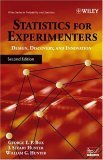
Statistics for Experimenters Review

Statistics for Experimenters cover
   
Disclosure, I am a bit biased – William G. Hunter was my father. But I agree with this review of Statistics for Experimenters: Design, Innovation, and Discovery , 2nd Edition posted by George Samaras

Superb! If you are involved, in any way, with science or engineering, you need this book on your shelf (after you have carefully read it twice). My only complaint is that I found out about it circuitously reading Prof. Box’s “Improving Almost Anything”; I was curious what the often cited BHH reference was. I think someone should have a word with the publisher’s marketing department; if we don’t know about it, how are we supposed to buy it?

George Box, Stu Hunter and Bill Hunter authored the first edition book in 1978 and the second edition in 2005.

I maintain Statistics for Experimenters web site. Visit the page to find resources, or to let us know about resources (data sets, exercises, etc.) for those using the book.

Related: Correlation is Not CausationStatistics for Experimenters (2nd Edition)Randomization in SportsGoogle Scholar references for BHH