Category Archives: Science

In Tunguska, Siberia 99 Years Ago

Just What Happened 99 Years Ago in Tunguska, Siberia?

in the morning of 30 June 1908, a few native peoples in Siberia reported seeing a blue light in the sky that was as bright as the sun and hearing a series of loud explosions, accompanied by fierce winds and fire. These explosions, which flattened the pristine Siberian Taiga for 770 miles (2,000 kilometers) around, are estimated to have had the power of 2000 Hiroshima atomic bombs. However, this area is so remote and Russia was experiencing so much political turmoil that no one was able to investigate the scene until 1927

Gasperini’s team says their data suggest that a 10 meter (33 foot) wide fragment of the celestial object was blasted free by the explosion and continued traveling in the same direction that the original object was moving in. This fragment traveled slowly, about 1 kilometer a second (0.6 mile) per second. When the fragment plowed into the marshy terrain five miles north of the explosion epicenter, it created a long, trenchlike depression.

“It splashed on the soft, swampy soil and melted the underlying permafrost layer, releasing CO2 [carbon dioxide], water vapor, and methane that broadened the hole, hence the shape and size of the basin, unusual for an impact crater,” argues Gasperini, adding that “our hypothesis is the only one that accounts for the funnel-like morphology of Lake Cheko’s bottom.”

Related: research paper A possible impact crater for the 1908 Tunguska EventMeteorite, Older than the Sun, Found in CanadaNASA Tests Robots at Meteor Crater

Statistics for Experimenters Review

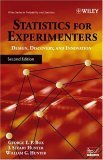
Statistics for Experimenters cover
   
Disclosure, I am a bit biased – William G. Hunter was my father. But I agree with this review of Statistics for Experimenters: Design, Innovation, and Discovery , 2nd Edition posted by George Samaras

Superb! If you are involved, in any way, with science or engineering, you need this book on your shelf (after you have carefully read it twice). My only complaint is that I found out about it circuitously reading Prof. Box’s “Improving Almost Anything”; I was curious what the often cited BHH reference was. I think someone should have a word with the publisher’s marketing department; if we don’t know about it, how are we supposed to buy it?

George Box, Stu Hunter and Bill Hunter authored the first edition book in 1978 and the second edition in 2005.

I maintain Statistics for Experimenters web site. Visit the page to find resources, or to let us know about resources (data sets, exercises, etc.) for those using the book.

Related: Correlation is Not CausationStatistics for Experimenters (2nd Edition)Randomization in SportsGoogle Scholar references for BHH

Norman Borlaug and Wheat Stem Rust

By increasing the production of wheat it is said Norman Borlaug has saved more lives than anyone else who ever lived. John Pollock provides a new look at his work in Green Revolutionary:

stem rust, a fungus whose airborne spores infect stems and leaves, shriveling grains.

Many thought the work that earned ­Borlaug his Nobel brought an end to stem rust, but it is back, in the form of a variant called Ug99, which emerged in Uganda and spread to Kenya and Ethiopia. “If it continues unchecked,” says Borlaug, “the consequences will be ruinous.”

Related: Five Scientists Who Made the Modern WorldMore Nutritious Wheat2004 Presidential Medal of Science WinnersDeadly wheat disease ‘a threat to world food security’

The Role of Science in Economy

Role of Science in Economy by Suh Nam-pyo, president of the Korea Advanced Institute of Science and Technology:

Over the past 30 years, Korea, led by the Ministry of Science and Technology (MOST), has established a strong base fostering innovation in science and technology, leading to impressive industrial and economic development.

organizations that can deal with both science and technology such as the Massachusetts Institute of Technology (MIT), IBM research laboratories and NASA’s Jet Propulsion Laboratory (JPL) have had a major impact on the economy as well as on science and technology.

National Laboratories should not compete with these industrial firms in these areas where industry is active. National Laboratories should rather work on more advanced technologies that industry will need in the future but not working at this time. As scientific fields advance and as technologies become sophisticated, new ideas are often synthesized at the interface between various disciplines of science and technology. This means that highly monolithic, single disciplinary research laboratories will not likely generate new exciting ideas.

Korea must follow the example of the U.S. in developing its research universities. By doing so, it too can create a new industrial base through research and technological innovation.

Good article making many of points I have posted about often relating to science, technology and economic success.

Related: Economic Benefits of Engineering ExcellenceHow to Build a World Class Technology EconomyBest Research University Rankings (Korea not in top 100 here)

Discussing Medical Study Results

Brazilian berry destroys cancer cells in lab, UF study shows:

“Acai berries are already considered one of the richest fruit sources of antioxidants,” Talcott said. “This study was an important step toward learning what people may gain from using beverages, dietary supplements or other products made with the berries.” He cautioned that the study, funded by UF sources, was not intended to show whether compounds found in acai berries could prevent leukemia in people.

“This was only a cell-culture model and we don’t want to give anyone false hope,” Talcott said. “We are encouraged by the findings, however. Compounds that show good activity against cancer cells in a model system are most likely to have beneficial effects in our bodies.”

Other fruits, including grapes, guavas and mangoes, contain antioxidants shown to kill cancer cells in similar studies, he said. Experts are uncertain how much effect antioxidants have on cancer cells in the human body, because factors such as nutrient absorption, metabolism and the influence of other biochemical processes may influence the antioxidants’ chemical activity.

The title the University of Florida gives the press release is misleading I think (even though true). But at least the text provides reasonable caution. We really need to make sure press releases (especially from Universities) don’t focus on hype. Universities need to be held their missions of education which includes helping the public understand science not confusing the public. Dr. Talcott’s page on the Açai berry. Universities are obviously more and more focusing on revenue instead of education – I am sure they will claim to support education… but they need to show that is true.

Related: Cancer Cure, Not so FastWhy Most Published Research Findings Are FalseEat food. Not too much. Mostly plants.

Science Webcasts

I have high hopes for SciVee – essentially a science focused YouTube. It has not grown as fast as I hoped it would when I first wrote about it last summer. Here is one cool short from the site:

This is a highly accurate visualization of the Bacteriophage T4 based on Cryo-EM datasets of the virus. The scope of the animation is to show the infection process of the T4 into an E. coli cell.

If you like that you will love: Inner Life of a Cell – Full Version

Some other recent SciVee videos: Where does water go when it rains?MicrobeWorld visits The Maloy Lab at San Diego State UniversityScience Gateways on the TeraGridSix Science bloggers talk about why they blog

Related: Science and Engineering Webcast DirectoryGoogle Engineering and Technology WebcastsTED (Technology, Entertainment, Design) talks

The Science of Happiness

Positive Psychology: The Science of Happiness

People with happy brains have their parents to thank, to a certain extent, not only for happy genes, but also for loving childhoods. Studies have shown that angry or critical parents can actually alter a child’s happiness level until it’s set around age 16.

Scientists have known for decades that a large part of our temperament is genetically pre-determined; by studying the personalities of identical twins they’ve found that about 50 percent of our happiness — or unhappiness — can be traced to our genes. Adding the 40 percent that we can control with our daily thoughts and actions still leaves about 10 percent unaccounted for. This remaining 10 percent is related to our life circumstances, such as where we live, how much money we have, our marital status, and how we look.

This is a very interesting article. Like many social science claims I find these claims more open to question than most other studies – but interesting none-the-less.

Related: The How of Happiness: A Scientific Approach to Getting the Life You Want by Sonja Lyubomirskyposts on psychology from our management blogThe New Science of Happiness (Time)The Science of Happiness (Harvard)Another Paper Questions Scientific Paper Accuracy

Understanding the Evolution of Human Beings by Country

graphic showing countries understanding of evolution I recently wrote about evolution and scientific literacy. The graph on the left shows the percentage of the population that understands evolution is a core scientific principle. The graph based on data from 2005 for 34 countries.

Blue indicates those that know that “human beings, as we know them, developed from earlier species of animals.”
Yellow are those that are unsure
Red are those that don’t know that it is true

Evolution Less Accepted in U.S. Than Other Western Countries, Study Finds, from National Geographic News:

A study of several such surveys taken since 1985 has found that the United States ranks next to last in acceptance of evolution theory among nations polled. Researchers point out that the number of Americans who are uncertain about the theory’s validity has increased over the past 20 years.

The United States is is second to last place in this question of scientific literacy with only 40% of the population knowing the truth. The USA was between Cyprus and Turkey in this measure of understanding of scientific knowledge. The most knowledgeable countries have about twice the rate of knowledgeable respondents (with nearly 80% knowing).

Related: Scientific Illiteracy by Country (the USA managed to stay in the top 10 for overall scientific literacy rate of 8th graders in 2003) – Understanding Evolution (University of California at Berkeley)Scientifically IlliteracyRetrovirusesDNA Repair ArmyMassive Project Will Reveal How Humans Continue to EvolveGene Study Finds Cannibal PatternNigersaurusRare Chinese Mountain Cat

Biggest Black Hole’s Mass = 18 Billion Suns

Biggest black hole in the cosmos discovered

The most massive known black hole in the universe has been discovered, weighing in with the mass of 18 billion Suns. Observing the orbit of a smaller black hole around this monster has allowed astronomers to test Einstein’s theory of general relativity with stronger gravitational fields than ever before.

The black hole is about six times as massive as the previous record holder and in fact weighs as much as a small galaxy. It lurks 3.5 billion light years away, and forms the heart of a quasar called OJ287.

The smaller black hole, which weighs about 100 million Suns, orbits the larger one on an oval-shaped path every 12 years. It comes close enough to punch through the disc of matter surrounding the larger black hole twice each orbit, causing a pair of outbursts that make OJ287 suddenly brighten.